
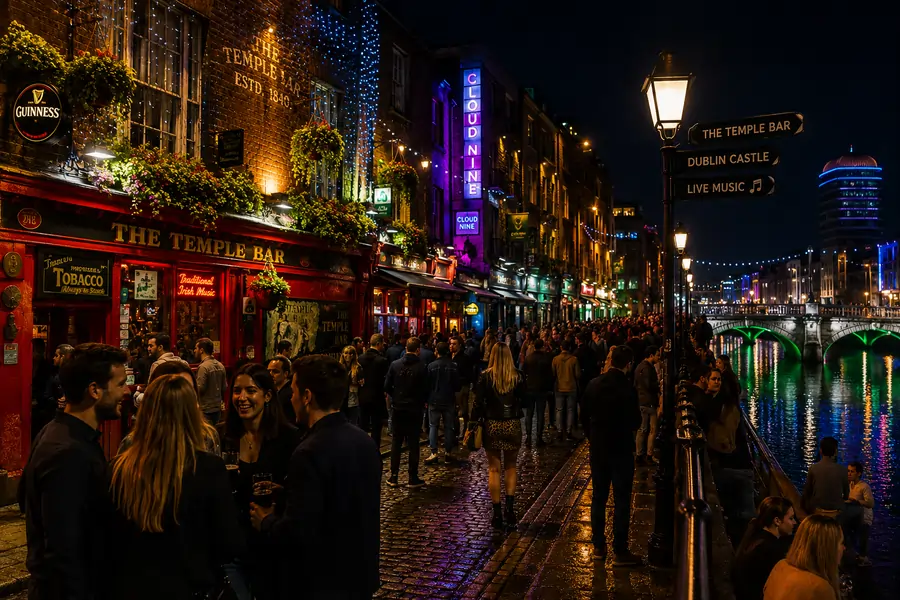

Dublin has one of the most celebrated nightlife scenes in Europe, and for good reason. The Irish capital combines centuries-old pub culture with a thriving live music scene, world-class restaurants and a club scene that punches well above its weight for a city of its size. Whether you are visiting for a weekend or planning a longer stay, knowing where to go after dark makes all the difference.
This guide covers the full spectrum of Dublin’s evening entertainment, from the iconic pubs of Temple Bar to the quieter neighbourhood bars that locals actually use. If you are planning to be in the city for New Year’s Eve in particular, NYE Dublin is the definitive resource for events, tickets and everything else you need for the biggest night of the year.
The Pub Scene
Any honest guide to Dublin nightlife has to start with the pub. The Irish pub is not just a drinking establishment — it is a social institution with its own rhythms, rituals and unwritten rules. On a good evening in a good Dublin pub, you will find live traditional music, genuinely warm conversation with strangers and a sense of community that is increasingly rare in modern city life.
Temple Bar is the most famous pub district and the first stop for most visitors. It is busy, occasionally touristy and reliably entertaining. The Auld Dubliner, The Temple Bar pub itself and The Foggy Dew are all worth a visit. Go early if you want to find a seat, and expect it to get loud as the evening progresses.
For a more local experience, the neighbourhoods of Stoneybatter, Rathmines and Ranelagh have excellent pub cultures that attract more residents than tourists. These areas tend to be slightly cheaper, significantly less crowded and often more rewarding if what you are after is genuine atmosphere rather than a tourist-friendly version of it. Mulligan’s on Poolbeg Street and Kehoe’s on South Anne Street are two city-centre institutions that have managed to retain their character despite their fame.
Traditional music sessions — known simply as sessions — are a highlight of the Dublin pub experience. These informal gatherings of musicians playing Irish traditional music happen in pubs across the city most nights of the week. They are not performances in the formal sense; musicians sit together and play, often for hours, with no stage and no announcement. The best ones happen organically, and stumbling upon a good session in a small pub is one of the genuine pleasures of Dublin nightlife.
Live Music Venues
Beyond the pub sessions, Dublin has a live music scene that produces and attracts talent from across Ireland and the world. The city has launched the careers of an extraordinary number of internationally successful artists, and that creative energy is still very much present on any given night of the week.
Whelan’s on Wexford Street is perhaps the most beloved mid-sized venue in the city, with a reputation for booking quality acts before they break big. The Academy on Middle Abbey Street covers a similar capacity range and hosts a mix of Irish and international acts. For larger shows, the 3Arena on the North Wall Quay is Dublin’s premier indoor concert venue, capable of holding over 13,000 people and regularly attracting major international touring acts.
The Olympia Theatre on Dame Street deserves special mention. It is one of the oldest working theatres in Ireland, and its combination of Victorian architecture, excellent acoustics and intimate atmosphere makes it one of the finest small concert venues in Europe. A show at the Olympia on a winter night, with the old building packed and warm against the cold outside, is a quintessentially Dublin experience.
For jazz, the Sugar Club on Lower Leeson Street is the go-to venue, while the Bernard Shaw in Portobello attracts a younger crowd for indie and alternative nights. The city’s music calendar is dense enough that on almost any night of the week you can find something worth seeing without much planning.
Club Nights and Late-Night Entertainment
Dublin’s club scene is smaller than London or Berlin, but it is genuinely good. The city has a handful of clubs that have built strong reputations over the years, and the quality of nights — in terms of music programming and crowd — is consistently high.
Wigwam on Middle Abbey Street is a reliable option for eclectic programming across multiple rooms. District 8 in the Liberties is the city’s biggest club space and hosts some of the most significant electronic music events in Ireland. For something more intimate, The Grand Social on Liffey Street has a good mix of club nights and live acts in a relaxed setting.
Dublin nightlife tends to run later than many visitors expect. Pubs close at around 11:30pm on weekdays and 12:30am on weekends, but clubs and late bars keep going until 2:30am or later. The transition from pub to club after midnight is a well-established part of the Dublin night out, and the city centre is compact enough that moving between venues on foot is easy.
Comedy and Theatre
Dublin has a thriving stand-up comedy scene that is well worth exploring. The Comedy Cellar at the International Bar on Wicklow Street is one of the longest-running comedy nights in Ireland and has launched the careers of a significant number of Irish comedians. Tickets are cheap, the room is small and intimate, and the quality is reliably high.
For theatre, the Abbey Theatre on Lower Abbey Street is Ireland’s national theatre and one of the most historically significant stages in the English-speaking world. It programmes a mix of classic Irish drama and new work, and attending a performance there is a cultural experience as much as an entertainment one. The Gate Theatre on Cavendish Row is another excellent option, with a more international programme and a beautiful Georgian interior.
The Project Arts Centre in Temple Bar is the city’s leading venue for experimental and contemporary performance, covering theatre, dance, visual art and interdisciplinary work. If your tastes run towards the unconventional, this is a good place to check what is on.
Restaurants and Late-Night Dining
Dublin’s restaurant scene has improved enormously over the past decade and now offers genuine depth across a wide range of cuisines and price points. For a pre-theatre or pre-club dinner, the areas around South Great George’s Street, Drury Street and the surrounding laneways have a high concentration of good restaurants within easy walking distance of most entertainment venues.
Late-night eating options in Dublin are more limited than in some other European capitals, but the situation has improved. Several restaurants now offer late sittings on weekends, and the city’s late-night food market and street food scene has grown considerably. For a post-pub bite, the chipper — as fish and chip shops are known in Ireland — remains an institution. Leo Burdock’s near Christ Church Cathedral is the most famous, but there are good options throughout the city centre.
Online Entertainment as Part of the Mix
Modern city breaks involve more downtime than people often plan for — the quiet hours in a hotel room before heading out, the slower morning after a big night, or the evening when everyone in your group wants something low-key. Online entertainment has become a natural part of how people fill those gaps.
Streaming services, sports apps and online gaming platforms all fit easily into a city break without requiring any particular effort. For those who enjoy casino gaming, Beonbet offers a wide range of casino games and sports betting in one place, accessible from any device. It is the kind of option that works well for a quiet evening in or as a way to add some extra excitement while watching sport. As with all gambling, it is important to play responsibly and within your limits. GamCare offers free, confidential support for anyone who has concerns about their gambling.
Practical Tips for Dublin Nightlife
A few practical notes that will make your experience smoother. Dublin pubs and clubs operate a strict over-18 policy and ID checks are common, particularly at late-night venues. Bring photo ID if you look anywhere close to the age limit.
Dress codes in Dublin are generally relaxed compared to cities like London. Most pubs and clubs operate a smart casual policy, and you are unlikely to be turned away for how you are dressed unless you are arriving in sportswear or visibly intoxicated. Trainers are fine at almost everywhere except the most formal club nights.
The city centre is safe and well-lit on most nights, and Dublin compares well with other European capitals on this front. As with any busy nightlife area, staying aware of your surroundings and keeping valuables secure is sensible advice. The Garda — the Irish police — have a visible presence in the Temple Bar area on busy nights, which contributes to a generally safe atmosphere.
Finally, book ahead wherever possible. The best pubs, restaurants and clubs fill up fast, particularly on weekends and during the festive season. A little planning goes a long way in Dublin, and it frees you up to enjoy the city rather than spending the evening looking for somewhere to go.