
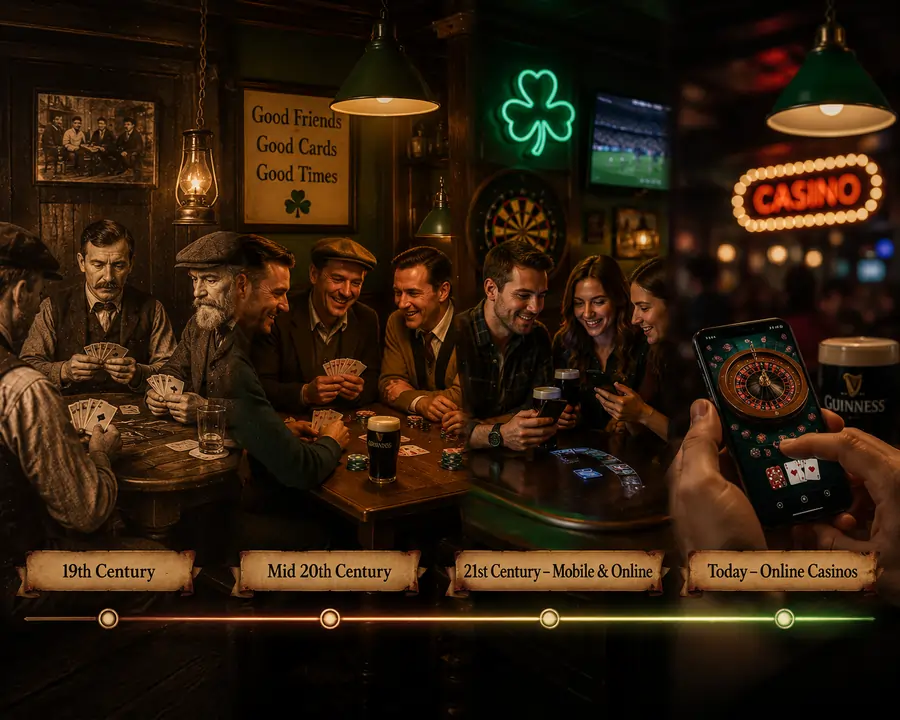

Step into any traditional Irish pub on a quiet weeknight and you might still find a few regulars huddled around a table with a deck of cards, a pint close at hand, settling small wagers over a game of Twenty-Five. This scene has played out in Irish pubs for centuries, and it tells us something important about Irish culture: the social instinct to gather, play and take a friendly chance on an outcome runs deep. That same instinct has simply found new outlets over time, eventually making its way from the card table to the online casino.
This article traces that journey, from the card games that defined pub social life in Ireland through to the modern online platforms that carry the same spirit of friendly competition into the digital age. For more on Dublin’s traditional pub scene, Dublin Pubs covers the best spots to experience this living tradition firsthand.
The Card Table Tradition
Card games have been a fixture of Irish pub culture for as long as pubs themselves have existed as social hubs. Twenty-Five, sometimes called Spoil Five, is widely regarded as Ireland’s national card game, with roots stretching back centuries and rules passed down through generations rather than written formally. The game is fast, social and forgiving of small mistakes, which made it perfectly suited to the relaxed atmosphere of a pub evening.
Forty-Five, a close cousin of Twenty-Five with its own regional variations, became particularly associated with rural pubs and community halls, often played in organised leagues that ran throughout the winter months. These card schools were as much about the social ritual as the game itself: the same faces gathering week after week, small running rivalries, and the gentle teasing that comes with decades of shared play.
Betting and Wagering as Social Glue
What made these pub card games genuinely engaging was the small element of wagering involved. Stakes were rarely high, often just pennies or the price of the next round, but that modest financial element transformed a simple card game into something with genuine stakes and consequence. It gave players a reason to pay close attention, to remember the cards played, and to care about the outcome beyond mere entertainment.
This pattern, low stakes combined with genuine engagement, is a recurring theme throughout the history of Irish gaming culture. The wager was never really about the money. It was about adding just enough tension to make the social ritual meaningful, while keeping the financial risk small enough that nobody’s evening was ruined by a bad run of cards.
The Arrival of Slot Machines and Amusement Arcades
The twentieth century brought a new dimension to Irish gaming culture with the arrival of slot machines and amusement arcades, particularly in seaside towns and larger pubs that had the space and licensing to accommodate them. These machines offered something the card table couldn’t: instant, solitary play that didn’t require gathering a group or knowing the rules of a traditional game.
Coastal towns like Bray and Tramore became known for their amusement arcades, where families on day trips would feed coins into machines alongside more traditional seaside attractions. This represented a genuine shift in how Irish people engaged with games of chance: from a deeply social, communal activity around a card table to something that could be enjoyed individually, in short bursts, without needing company.
The Rise of the Betting Shop
Horse racing has held a special place in Irish culture for generations, and the betting shop became a natural extension of pub gaming culture through much of the twentieth century. Many Irish towns had their bookmaker’s shop within easy walking distance of the local pub, and it was common practice to pop in to check the odds or place a bet before settling in for the evening.
This created a distinctly Irish rhythm to weekend afternoons: a visit to the bookmaker, a pint while the race played out on the shop’s television, and conversation that flowed naturally between the form of the horses and whatever else was happening in the parish. The betting shop and the pub functioned almost as companion institutions, each feeding into the social life built around the other.
The Digital Transition
The internet changed everything about how Irish people engage with games of chance, just as it changed so much else. What once required a trip to the pub, the betting shop or the seaside arcade became available from a phone or laptop at any hour of the day. The social ritual that defined card games and the convenient instant gratification of slot machines both found new digital expression.
Online casinos in particular have captured much of what made the older traditions appealing. They offer the variety of a full pub card school, the instant accessibility of an arcade slot machine, and the modest, manageable stakes that defined Irish wagering culture for generations. Lucky Ones Promotions is one example of how modern platforms have built on this tradition, offering a wide range of games and ongoing promotions that echo the small, friendly wagers of an old pub card game, just delivered through a screen rather than a deck of cards.
What’s Been Lost and What’s Been Gained
It would be easy to romanticise the old card table tradition and view online gaming as a poor substitute, but the reality is more nuanced. Something genuine has certainly been lost: the face-to-face banter, the shared physical space, the decades-long rivalries built up over hundreds of evenings at the same pub table. Online platforms cannot replicate that particular kind of social texture.
But something has also been gained. Online gaming offers far greater variety than any single pub could ever provide, accessibility for people who might not live near a traditional gaming pub or who have mobility or scheduling constraints that make an evening out difficult, and the ability to play at whatever pace and stake level feels comfortable, without the social pressure that can sometimes accompany a live card game among acquaintances.
The Through Line: Modest Stakes, Genuine Engagement
What connects the card table of a hundred years ago to today’s online casino platform is not the technology, but the underlying appeal: a small, manageable wager that adds just enough tension to make the experience genuinely engaging, without the stakes ever overwhelming the entertainment value. This has been the consistent thread running through Irish gaming culture across every era and format.
Whether that takes the form of a few coppers riding on a hand of Twenty-Five in a rural pub or a modest deposit on a modern online platform, the principle remains the same: gaming works best as entertainment when the stakes stay proportionate to the fun being had. Keeping that balance is what separates a good night’s entertainment from something that causes genuine harm. For information and support on responsible gambling, the Gambling Awareness Trust’s GamblingCare.ie offers free and confidential support for anyone in Ireland who has concerns about their gambling.